Blown Fuse: What It Means and What to Do
A blown fuse usually means the board worked exactly as intended. Something drew more current than the circuit's rated for, and the fuse gave way to protect the wiring.
Usually it's a quick fix. Now and then it's a sign of something bigger.
Ring (02) 9134 9024 and tell us what's happened; we can usually give you a good idea before we're even on site.
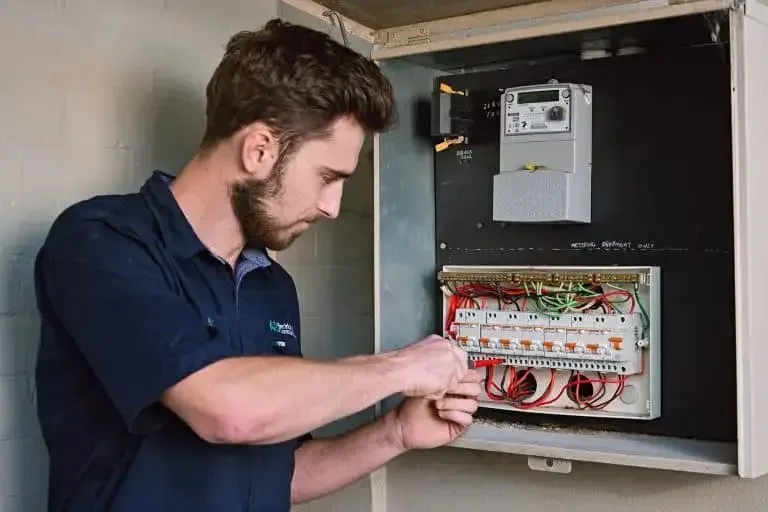
What a Blown Fuse Actually Means
A fuse is a sacrificial part. It's designed to fail before the wiring behind it does.
Once the current climbs past what the circuit is rated to handle, the wire inside the fuse melts through and opens the connection, cutting the overload off before it can cook the wiring or worse.
In a modern board, that job's usually done by a circuit breaker that trips and resets instead. Older Camperdown terraces sometimes still run genuine rewireable fuses, where a physical fuse wire needs replacing each time.
One blown fuse on its own, with an obvious cause, is rarely a big deal. A fuse that keeps going on the same run, over and over, is a different story.
Some people confuse a blown fuse with a tripped circuit breaker, and it's an easy mix-up. A fuse is a one-time-use part that needs replacing; a breaker is a switch that resets with a flick.
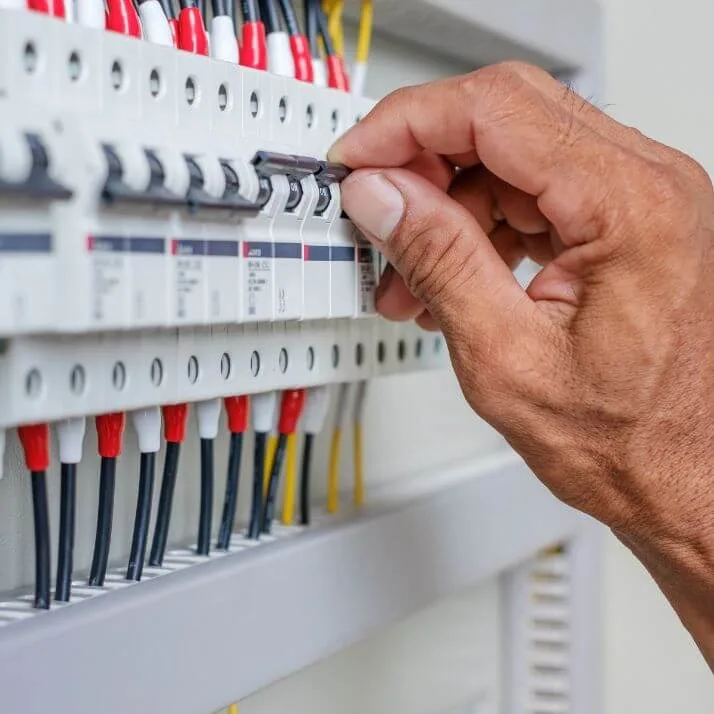
Why Your Fuse Actually Blew
- Too much plugged into a single run. Kettles, heaters and hair dryers stack up fast on an older board.
- An appliance on its way out. A motor or heating element in decline can pull well past its normal draw.
- A short circuit. Wiring fault or damaged cable letting current take a path it shouldn't.
- A fuse rated too low for what it feeds. Sometimes the wrong rating got fitted somewhere back down the line.
- A loose connection generating heat. Can trip a fuse even without an obvious overload.
- Age. Rewireable fuse elements weaken over decades of thermal cycling.
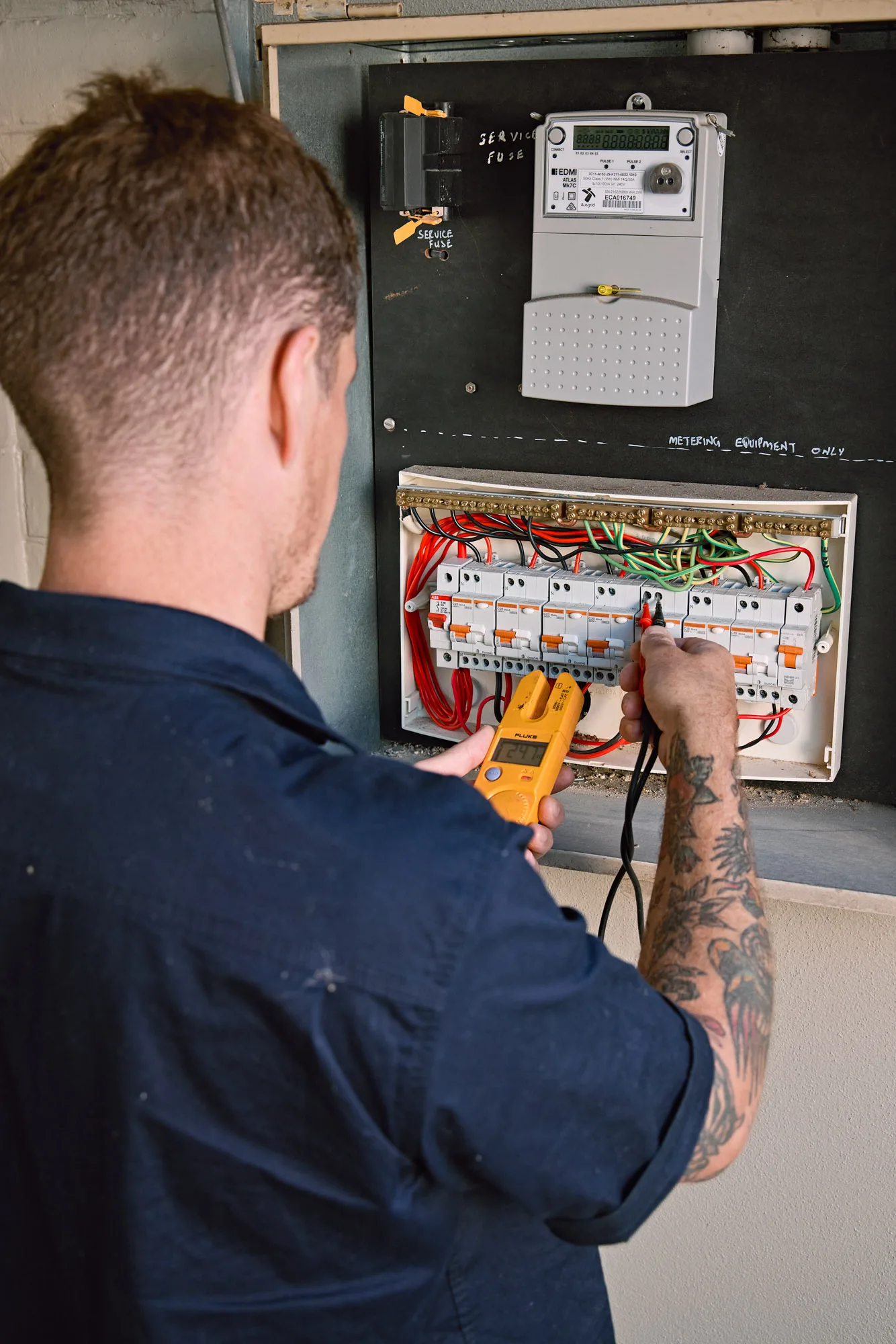
Should You Worry? An Honest Answer
One fuse, once, with a clear cause like plugging in a heater on a busy circuit, is nothing to lose sleep over.
A fuse that keeps letting go on the same run within days, or one that blows the moment it's replaced, points to a genuine fault that needs finding.
Any scorch marks near where the fuse sits, or a burning smell, changes this from routine to urgent immediately.
Also urgent: a replacement fuse that doesn't last. If the new one goes almost immediately, whatever caused the first blow is still sitting there unresolved.
Scorching or a burning smell means one thing: isolate that circuit at the board straight away and get (02) 9134 9024 on the phone.
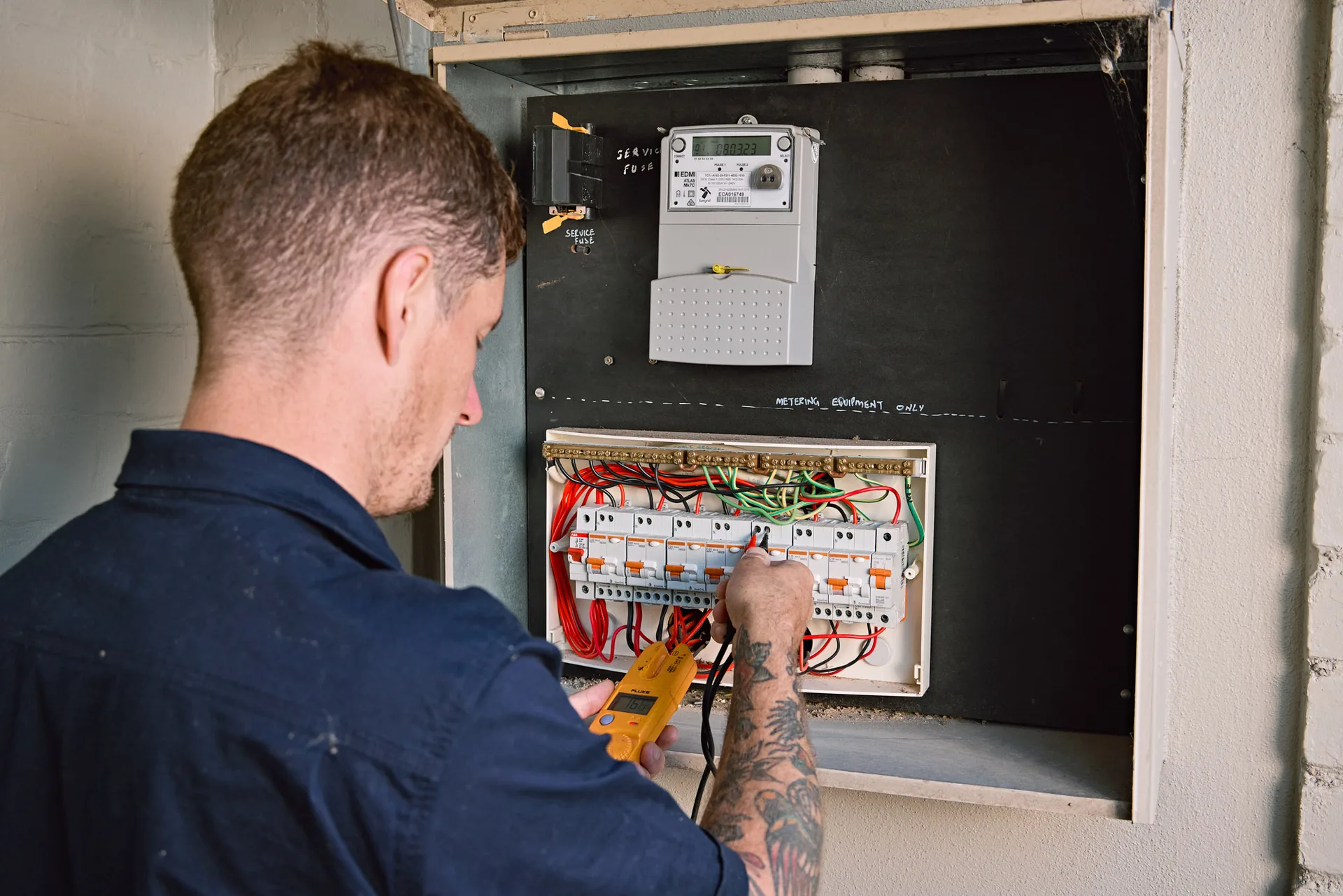
Do This First
- Identify which circuit's affected. Check what stopped working; that tells you which fuse to look at.
- Unplug what was running at the time. Removes the likely trigger before anyone resets anything.
- Leave the fuse itself alone. Replacing a rewireable fuse is licensed electrical work in NSW, not a DIY job.
How We Fix a Blown Fuse
We isolate the circuit first, then run proper tests instead of guessing and swapping the fuse blind.
Load testing identifies whether the circuit's genuinely overloaded, and insulation testing rules a short circuit in or out.
Where it makes sense, swapping the old fuse holder for a breaker is worth discussing, so the board resets with a switch flick instead of a fresh fuse wire.
The repair's carried out to AS/NZS 3000, with paperwork provided on any notifiable work.
Before the cover goes back on, we'll walk you through the actual fault and why it happened, not just hand you a bill. Anything beyond a straightforward fuse swap comes with a written price before it starts.
The Camperdown Pattern We Keep Seeing
Camperdown's older terraces near the university and hospital precinct often still carry the original board, and a lot of those original fuse holders are still doing the same job they were fitted for decades ago.
Share-house living packs more appliances onto the same handful of circuits than those old boards ever expected to carry, and that's a big part of why fuses in these homes blow more often than in a newer build.
We'll often find one circuit doing double duty for a kitchen and a laundry that were never meant to run off the same fuse. Splitting that load properly usually solves the repeat-blow pattern for good.
How to Stop It Happening Again
- Upgrade to circuit breakers. No more replacing a physical fuse element every time something trips.
- Add extra circuits. Spreads the load so no single fuse carries too much.
- Fit safety switches (RCDs). Protects people from shock, separate to the fuse's job of protecting wiring.
- Get the board assessed if fuses blow more than once. Repeated blows almost always mean a genuine fault, not bad luck.
A full fuse-to-breaker conversion falls under switchboard upgrades; chasing down a single fault is usually just electrical repairs.
Related Faults and Surrounding Areas
The overload that pops a fuse can just as easily trip a circuit breaker on a newer board, so the cause is often identical even when the hardware isn't.
Hearing a hum or crackle at the same time? Read up on what a noisy board means.
We service Camperdown along with Newtown, Annandale, Stanmore and nearby Inner West suburbs.

Book an Electrician Today
A repeated blown fuse is worth sorting properly rather than replacing the same fuse over and over. Call (02) 9134 9024, often same or next day.
Every job comes with an upfront written price and our lifetime workmanship guarantee.
Common questions
Common Blown Fuse FAQs
Can I keep using the circuit while I wait?
Not on the affected circuit until the fuse or breaker's reset and holds. Other circuits on the board are usually fine to use as normal.
Will the repair come with a certificate?
On notifiable work, yes. A Certificate of Compliance is lodged and kept on file for you.
How fast can you get to Camperdown?
Often same or next day for a standard booking. A genuine emergency call gets priority.
Should I turn off the mains?
Only if you can't isolate the affected circuit alone, or if there's any smell of burning. Otherwise the individual circuit switch is enough.
Does insurance care about non-compliant repairs?
It can matter. An insurer can push back on a claim where faulty wiring's involved and nothing's on record to show it was fixed properly.
Can I fix it myself?
No. NSW law reserves electrical repair work for a licensed electrician, and a DIY fix voids any warranty and creates real safety risk.